Direct Mail,EDDM Mailers,Flyers, Brochures & Booklets,Letters, Statements & Envelopes,Mail Campaigns,Postcards,Print,Self Mailer,Snap Packs
Personalization Has Grown Up
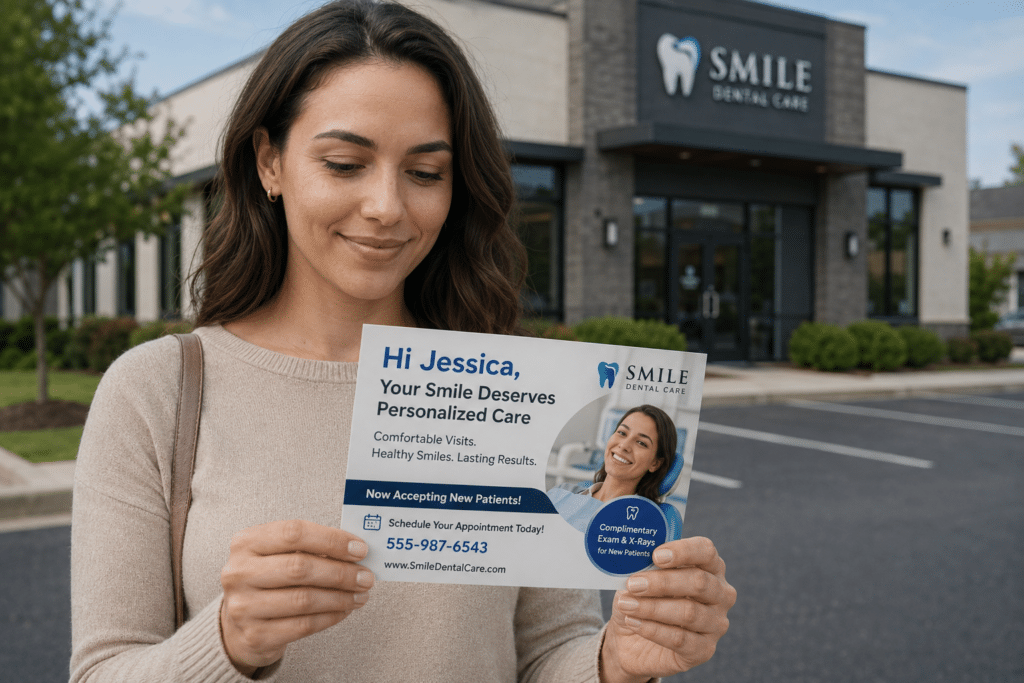
Not long ago, personalized direct mail meant adding someone’s first name to a postcard.
Today, that simply is not enough.
Consumers receive hundreds of marketing messages every week across email, social media, streaming services, and websites. If your direct mail looks like it was sent to everyone, it will likely be treated the same way as generic digital advertising.
Hyper personalization has changed the game.
Instead of creating one marketing piece for thousands of recipients, businesses can now use Variable Data Printing (VDP) to customize nearly every element of a mail piece for each individual. The offer, headline, imagery, call to action, QR code, map, and even the featured products can change based on customer data, purchase history, geographic location, demographics, or previous interactions with your brand.
The result is direct mail that feels relevant instead of mass produced, leading to stronger engagement and better marketing performance.
Variable Data Printing Goes Far Beyond a First Name
One of the biggest misconceptions about Variable Data Printing is that it only changes the recipient’s name.
Modern VDP can personalize nearly every visual and written element of a mail piece, including:
- Product recommendations based on previous purchases
- Industry specific messaging
- Localized photography and maps
- Different promotions for different customer segments
- Personalized URLs (PURLs)
- Individual QR codes leading to custom landing pages
- Appointment reminders Renewal notices
- Loyalty rewards and special offers

For example, a nationwide home services company could mail homeowners in Maine a postcard highlighting snow removal services while homeowners in Florida receive the same design promoting hurricane preparation. Everything from the headline to the images and offer can change automatically while being printed in a single production run.
That level of relevance helps recipients feel like the message was created specifically for them.
Real World Examples of Hyper Personalized Mail
Businesses across nearly every industry are using Variable Data Printing to create more meaningful customer experiences.
A healthcare provider may send preventive care reminders based on a patient’s age group, while including the nearest clinic location and a QR code for online scheduling.
A financial institution might deliver different loan offers depending on whether the recipient is a first time homebuyer, an existing customer, or someone who recently inquired about refinancing.
Retail brands frequently personalize catalogs by featuring products that align with a customer’s previous purchases or browsing behavior instead of sending identical catalogs to every household.
Even nonprofit organizations benefit from VDP by referencing previous donations, volunteer history, or local community projects to create a stronger emotional connection with supporters.
These campaigns feel personal because they are built around the recipient’s interests, not around what the organization wants to promote.
Better Personalization Leads to Better ROI
The real value of Variable Data Printing is not simply making mail look impressive. It is producing measurable business results.
According to Lob’s 2025 State of Direct Mail Consumer Insights Report, 72% of consumers immediately discard direct mail that feels irrelevant. However, 67% say personalized details encourage them to take action, and 52% are more likely to engage with mail that feels tailored specifically to them. The report also found that 81% of consumers are more likely to re engage with a brand after receiving direct mail, while 41% are more likely to engage when personalized direct mail is combined with digital marketing.
For marketers, these numbers reinforce an important lesson.
The quality of your customer data is often just as important as the quality of your design.
When businesses combine clean mailing lists, thoughtful audience segmentation, compelling creative, and Variable Data Printing, they often see higher response rates, improved conversions, and a stronger return on every marketing dollar.
The Future of Direct Mail Is Data Driven
As marketing technology continues to evolve, personalization will become the standard rather than the exception.
Customers expect brands to understand who they are, what they need, and when they are most likely to respond. Variable Data Printing makes that possible by turning customer data into highly relevant, personalized direct mail without sacrificing production efficiency.
The most successful campaigns in 2026 are no longer asking whether they should personalize their direct mail. They are asking how much personalization they can deliver while maintaining accurate data and a seamless customer experience.
When your messaging, imagery, offers, and timing work together, direct mail becomes far more than ink on paper. It becomes a conversation that feels personal, relevant, and worth responding to.
For businesses looking to increase engagement and maximize marketing ROI, hyper personalized direct mail is no longer a competitive advantage. It is quickly becoming the expectation.